Is ADHD Considered a Mental Illness? What Parents of Young Children Should Know
Last updated: November 3, 2026

Yes, technically. The big U.S. medical groups call ADHD a mental disorder, and more exactly a neurodevelopmental one, which means it affects how the brain develops. That doesn’t mean your child is broken, and it doesn’t mean nothing helps. Picture Leo’s mom at preschool pickup. His teacher says, “We should talk about ADHD.” That night, she types: “Is ADHD considered a mental illness?” If that’s you, here’s what the words mean, what the label could change, and what to say to the people around you.
Is ADHD Considered a Mental Illness?
Yes, by medical definitions. The American Psychiatric Association calls ADHD one of the most common mental disorders affecting children. The National Institute of Mental Health defines mental illness as “a mental, behavioral, or emotional disorder.” ADHD fits.
The words can sound scarier than they are. Many people hear “mental illness” and picture a crisis. Doctors usually say “disorder,” which just means a recognized pattern of symptoms. It describes the pattern, not your child as a person.
What Does “Neurodevelopmental” Mean?
It means the condition starts in childhood and affects how the brain grows and works. The APA lists ADHD among its neurodevelopmental disorders. So ADHD is a medical condition, not simply a discipline problem.
Is ADHD a Disability?
Sometimes, depending on how it affects your child’s learning. In U.S. special education law, ADHD is named under other health impairment, a category that applies when the condition “adversely affects a child’s educational performance.” So the diagnosis alone doesn’t decide it. The impact does.
Is ADHD a learning disability?
No, but the two often show up together. The nonprofit Understood explains that a learning disability makes it hard to pick up specific skills like reading or math. ADHD affects broader skills, like paying attention and controlling impulses.
What help exists at ages 3–5?
You’ll hear two terms: IEP and 504 plan. The CDC explains that an IEP gives individualized special education services, and a 504 plan changes the learning environment so your child can learn alongside other kids. For ages 3–5, a federal preschool program provides special education and related services for children with disabilities. Whether your child qualifies depends on an evaluation and your state’s rules. Start by asking your pediatrician and your local school district what the process looks like where you live.
Why Do Websites Give Different Answers?
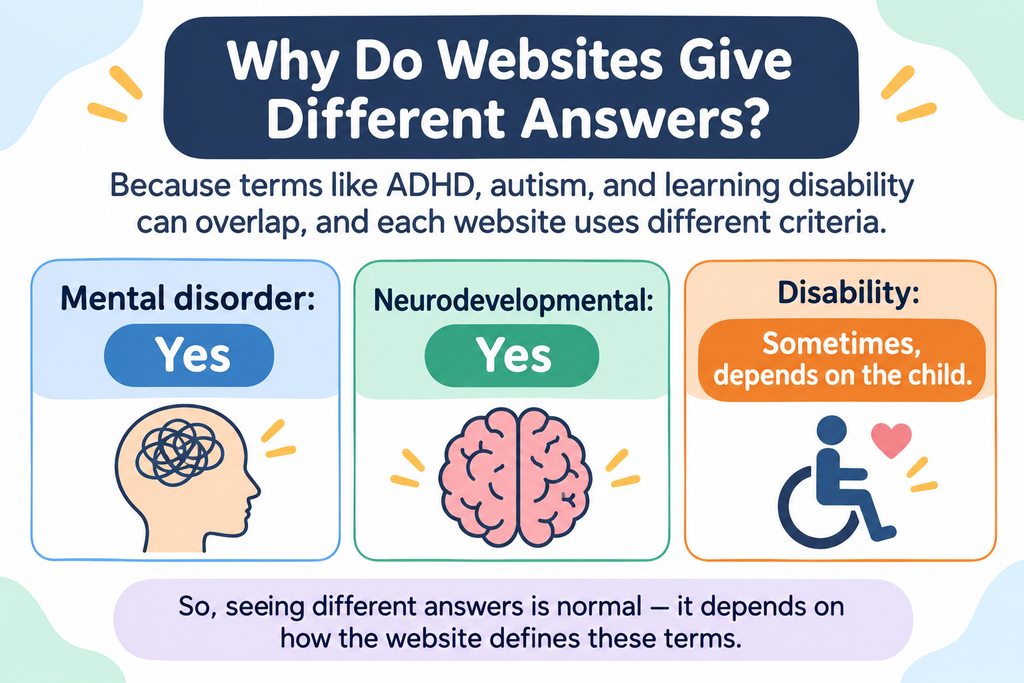
Because each word answers a different question. “Mental illness” and “neurodevelopmental disorder” are medical terms, and ADHD fits both. “Disability” is a legal and school term, and it depends on the child. Some pages blur the three, so one says “yes,” another says “neither,” and parents end up more confused. Trust pages that name their sources.
What Does the Label Change for My Child?
It can open doors, but it doesn’t change who your child is. For children under 6, the CDC says behavior therapy comes first, with therapists coaching you in new skills. Medicine comes later, and its long-term effects in this age group aren’t known.
What Should I Say to My Child, Family, and Teacher?
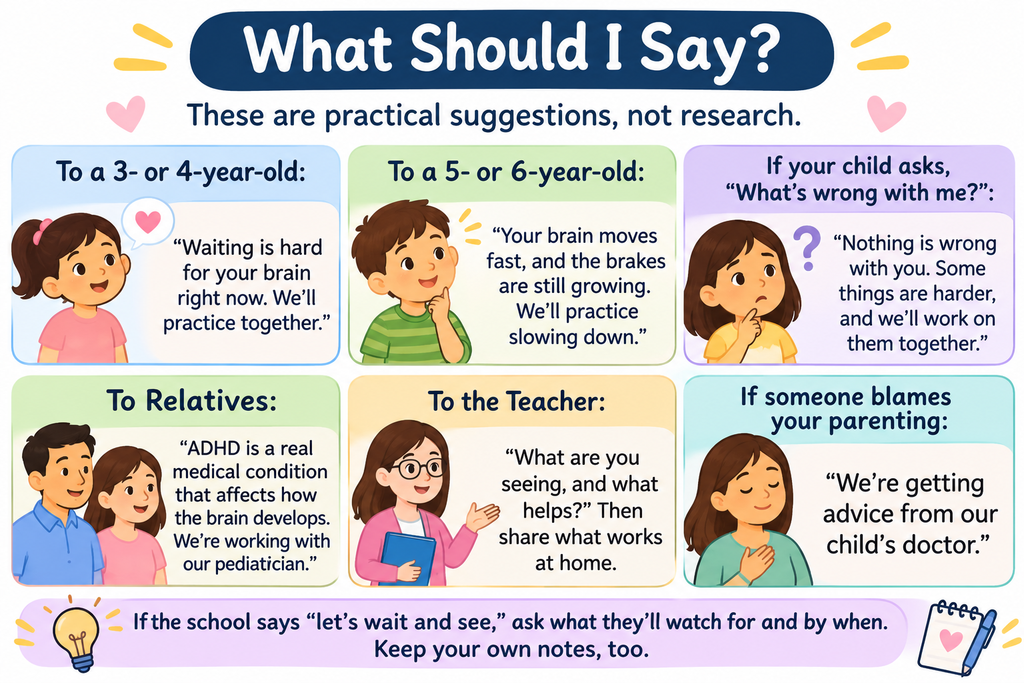
Keep it short and kind. These are practical suggestions, not research.
- To a 3- or 4-year-old: One sentence is plenty. “Waiting is hard for your brain right now. We’ll practice together.”
- To a 5- or 6-year-old: Add a little more. “Your brain moves fast, and the brakes are still growing. We’ll practice slowing down.”
- If your child asks, “What’s wrong with me?”: “Nothing is wrong with you. Some things are harder, and we’ll work on them together.”
- To relatives: “ADHD is a real medical condition that affects how the brain develops. We’re working with our pediatrician.”
- To the teacher: “What are you seeing, and what helps?” Then share what works at home.
- If someone blames your parenting: You don’t have to debate it. Try, “We’re getting advice from our child’s doctor.”
If the school says “let’s wait and see,” ask what they’ll watch for and by when. Keep your own notes, too.
Not Sure It’s ADHD?
That’s okay. You don’t have to decide tonight. Most wiggly, distracted behavior at ages 3–6 is normal, and a pediatrician can evaluate a true pattern starting at age 4. Jot down what happens, where, and for how long, then bring your notes to the appointment. Our guide to ADHD in ages 3–6 explains how evaluation works.
Your Next Step
So, is ADHD a mental illness? Technically yes, and it’s also a neurodevelopmental condition that families and schools can support. This week, write down what you see, call your pediatrician if it keeps happening, and ask your child’s school what help exists. A diagnosis isn’t a verdict. It’s a starting point.