How to Fix Attention Span in Kids: 6 Gentle Steps for Ages 3–6
You can’t fix a young child’s attention span overnight, but you can build it, a few minutes at a time, with enough sleep, fewer screens, and short, playful practice. Maybe you set out a puzzle, and two minutes later your 4-year-old is across the room. You start to wonder if something’s wrong. If you’ve been searching how to fix attention span in a little kid, take a breath. Here’s what’s typical for ages 3–6, six steps to try this week, and the signs that mean it’s time to call your pediatrician.
How Long Is a Child’s Attention Span at Ages 3–6?
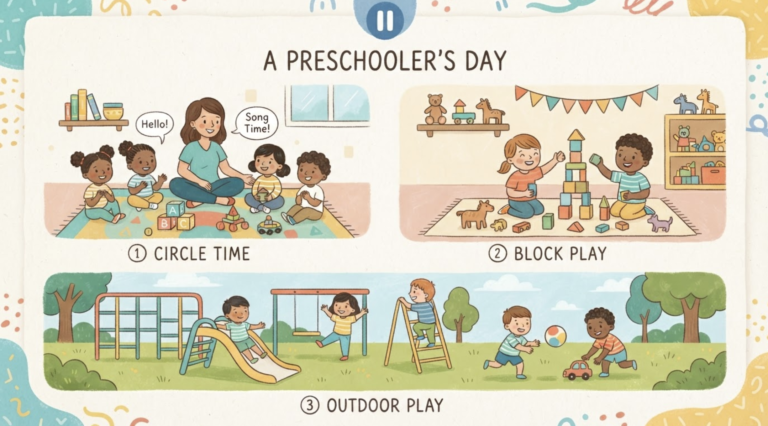
Not long, and that’s normal. Understood, a nonprofit with a physician author, says preschoolers are often distractible, active, and impulsive. Squirming through circle time is typical.
Online charts give exact minutes, but kids vary too much for one number to be reliable. The attention span of a 3-year-old looks very different from a kindergarten attention span, so compare your child to themselves last month. Can they finish one small task with you nearby? Is it a bit easier now? The CDC’s milestone checklists for ages 3, 4, and 5 show what to expect.
Why Does My Child Struggle to Pay Attention?
Usually because the skills behind attention are still being built. Harvard’s Center on the Developing Child calls them executive function: focusing, remembering directions, and ignoring distractions. Kids aren’t born with them. They grow through practice and warm support. Being tired, hungry, or overstimulated makes it harder, which is why steps 2 to 4 below matter.
How Do I Fix My Child’s Attention Span? 6 Steps
Build it with small wins: a short task, good sleep, fewer screens, clear directions, attention games, and movement.
1. Start With a Short Task
Pick one task with a clear finish, like a single maze. Sit close, and stop when your child succeeds. Try about three minutes for a 3-year-old, five for a 4- or 5-year-old, and a second page for a 6-year-old. Those times are practical starting points, not research numbers, so adjust them. Then name what they did: “You stayed with the whole maze!”

2. Protect Sleep
Tired kids have a harder time paying attention. The CDC says ages 3–5 need 10 to 13 hours of sleep in 24 hours, including naps. Count back from the wake-up time to find a bedtime that fits.
3. Trim Screens
Aim for no more than an hour a day of quality programming, and keep TVs out of the bedroom, as the CDC suggests. The AAP warns that screens can crowd out play, books, outdoor time, and conversation, and advises against using a device to calm a bored or upset child. Swap one screen block for blocks, play dough, or a book.
4. Give One Clear Direction at a Time
Kids tune out long strings of instructions. Get down to eye level and say one thing: “Put the red car in the basket.” The CDC recommends being clear and consistent, and telling kids what to do instead of only what to stop. Say “Feet on the floor,” not “Stop climbing.”
5. Play Attention Games
Harvard’s guide for ages 3–5 suggests simple games that make kids pause and remember a rule. Five minutes is plenty:
- Freeze dance: Stop the music and have your child freeze. For 3-year-olds, plain freezing is enough. Older kids can copy a pose from a picture card.
- Opposite bingo: Say “day,” and your child marks “night.” Use pairs like hot and cold, or big and little.
- Sorting with changing rules: Sort buttons by color, then say “now by size.”
6. Let Them Move First
Try five minutes of tag, ball tossing, or kite flying before a seated task. The AAP lists these as active play for preschoolers. Whether it helps focus is a practical tip, not a proven fix, so watch your child. If running around winds them up, try a quieter game.
Progress is uneven. Expect a good day, then a rough one.

What If My Child Still Won’t Pay Attention?
Make the moment easier, not harder.
- Cut the task in half, or do just the first step.
- Sit beside them for the first minute, then step back. Harvard’s guide describes this approach: adults support kids through a hard task first, then step back so kids can manage on their own.
- Offer a choice, like “maze or tracing?” The CDC recommends simple choices at this age.
- Say “I’ll sit with you for the first one” if you hear “I don’t want to.”
- Stop if frustration rises, and try again tomorrow.
When Should I Talk to My Pediatrician?
Talk to them if the trouble shows up in more than one place, lasts for months, or gets in the way of daily life. Understood says warning signs include struggling to focus even on activities your child loves, or being unable to sit through a meal or bedtime story. It also lists problems in more than one setting, such as home and preschool, for at least six months. Ask the teacher what they see first.
Ordinary distractibility isn’t ADHD. The CDC says there’s no single test, and sleep problems, anxiety, and some learning disabilities can look similar. An evaluation usually includes a medical exam with hearing and vision tests, and getting help early matters. If a child under 6 is diagnosed, the CDC says parent training in behavior management should come first. Worksheets and routines support skills. They don’t replace professional care.
Your Next Step
Short tasks, enough sleep, fewer screens, one clear direction, a little play, and some movement add up. Pick one this week. Tonight, you could print a free maze worksheet and try it for three minutes. Notice what helps, and share it with your child’s teacher.