
Attention Disorder Hyperactivity (ADHD) in Ages 3–6: What Parents Should Know
Last updated: November 2, 2026
Attention disorder hyperactivity, better known as ADHD, is a lasting pattern of trouble paying attention, sitting still, and stopping to think first. Most wiggly, distracted behavior at ages 3–6 is normal, and a pediatrician can evaluate a true pattern starting at age 4. Picture a 4-year-old named Leo. He squirms through story time, and his teacher just mentioned it. If you’re feeling that worry too, here’s what ADHD is, what’s typical, how it’s checked, and what to try at home.
What Is Attention Disorder Hyperactivity (ADHD)?
It’s a condition that affects attention, activity level, and self-control, and it starts in childhood. The National Institute of Mental Health calls it a developmental disorder with ongoing inattention, hyperactivity, and impulsivity. There are three types: mostly inattentive, mostly hyperactive-impulsive, and combined.
Is ADHD a mental illness?
It’s a recognized medical condition that affects how the brain develops. The CDC groups it with the most common neurodevelopmental conditions of childhood. Nobody knows the exact cause, but genes play an important part.
What’s Normal at Ages 3–6, and What’s Not?
Normal is short attention and lots of wiggling. A concern is a pattern that lasts, shows up in more than one place, and gets in the way of daily life. The CDC says “It is normal for children to have trouble focusing and behaving at one time or another.” Not sure what’s typical at your child’s age? The CDC’s milestone checklists cover ages 3, 4, and 5.
Back to Leo. He squirms at circle time, but he builds with blocks at home for ten minutes. That’s typical. Now say he’s also constantly on the go, at home and at school, month after month, and it’s hurting meals, friendships, or safety. That’s the pattern to raise.
With ADHD, kids don’t simply grow out of it. Symptoms can include daydreaming, losing things, fidgeting, and trouble taking turns. Smaller children may run, jump, or climb constantly.
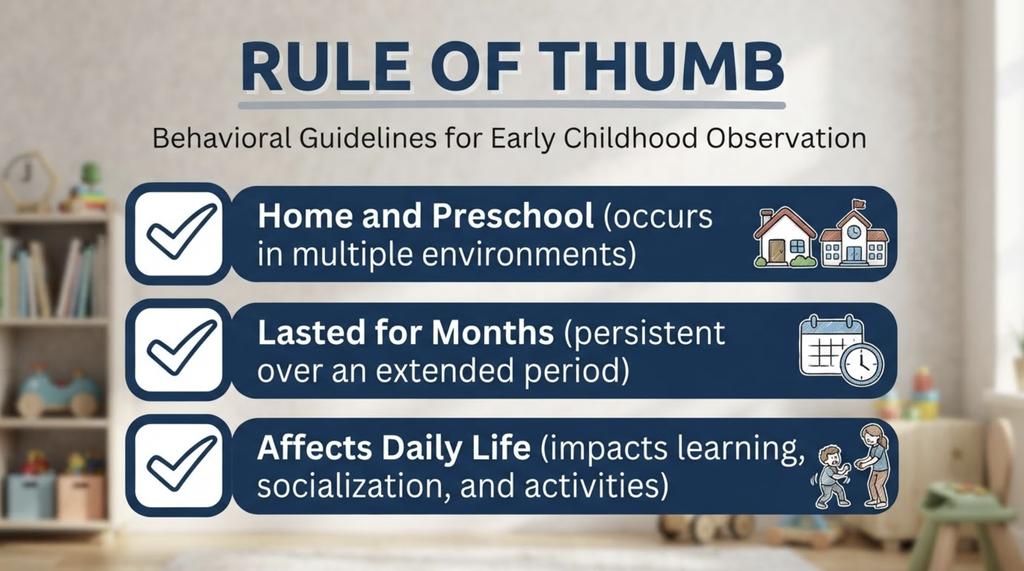
Here’s a rule of thumb. Ask yourself:
- Does it happen at home and at preschool?
- Has it lasted for months, not days?
- Does it get in the way of meals, play, friendships, or safety?
Yes to all three is worth a call to your pediatrician.
Can a Child Have Attention Deficit Disorder Without Hyperactivity?
Yes. Doctors call it the mostly inattentive type of ADHD. These children may daydream, lose track of directions, or drift off a task without being loud or wild. Mayo Clinic notes that girls may show this quieter pattern more often.
Can a Pediatrician Diagnose ADHD in a Preschooler?
Yes, from age 4. The American Academy of Pediatrics (AAP) guidelines cover ages 4 to 18 and call diagnosing younger children difficult. Signs can appear as early as 3, though, so call sooner if you’re concerned.
There’s no single test. Your pediatrician will compare your child with same-age kids, using your reports and the teacher’s, plus a physical exam and medical history. They’re looking for the pattern above: more than one setting, over six months, affecting daily life. They’ll also rule out other causes, like sleep problems or anxiety. Blood tests and brain scans aren’t useful on their own.
What if my pediatrician says to wait?
Ask what to watch for and when to come back, and bring your notes. If it only happens at preschool, ask the teacher what they see. Problems in only one setting may point to something other than ADHD.
What happens if my child is diagnosed?
For preschoolers, the first step is usually not medication. The CDC explains that behavior therapy comes first for children under 6, with therapists coaching parents in new skills. Medicine comes later, and its long-term effects in children under 6 aren’t known, so talk through the options with your pediatrician.
What Activities Help With Hyperactivity at Home?
Short bursts of active play and calm, simple tasks are easy to try at home. They aren’t a treatment, and they don’t replace a medical evaluation.

- Keep a two-week log. Leo’s mom could jot down what happened, where, and for how long. Share it with your pediatrician and the teacher.
- Check sleep first. Kids ages 3–5 need 10 to 13 hours a day, including naps. Tired kids can look wound up.
- Move before sitting. Try five minutes of tag, ball tossing, or kite flying, all ways the AAP suggests to make family time active.
- Give one direction at a time. Say “Put the red car in the basket,” not a string of steps.
- Use a picture routine. Draw play, snack, and activity on a card. Point to it and say, “First play, then snack.”
- Keep table tasks short. Try about three minutes at age 3, five at ages 4–5, and a second page at 6. Stop while your child is still succeeding. If he melts down, shorten the task or try again after a snack and some movement.
Your Next Step
Keep notes, protect sleep, move first, and call your pediatrician if the pattern fits. For a gentle three-minute table task, try a free maze worksheet. A finished maze can be a small win, but it won’t treat ADHD or replace professional care.