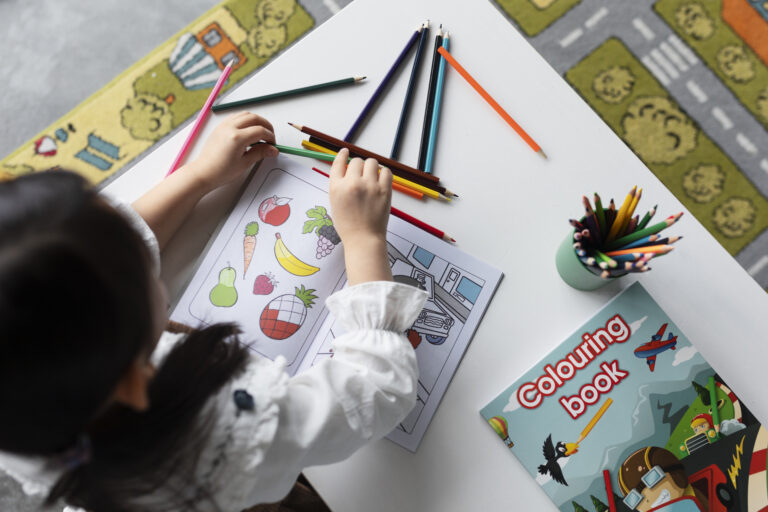
Struggling to keep your ADHD child focused during learning time?
Do simple tasks turn into daily battles?
You’re not alone—and the good news is, Montessori at home can actually make things easier, not harder.
In this guide, you’ll learn practical, real-life strategies to teach your ADHD child using Montessori methods—without overwhelm, pressure, or complicated setups.
Why Montessori Works So Well for ADHD Children
Montessori isn’t about strict rules or sitting still.
It’s about:
- Movement
- Choice
- Hands-on learning
And that’s exactly what ADHD children need.
Instead of fighting their energy, Montessori uses it.
What Makes Montessori ADHD-Friendly?
- Short, focused activities
- Freedom to choose tasks
- Hands-on materials (not just worksheets)
- Calm, clutter-free environment
👉 This helps reduce:
- Overstimulation
- Frustration
- Power struggles
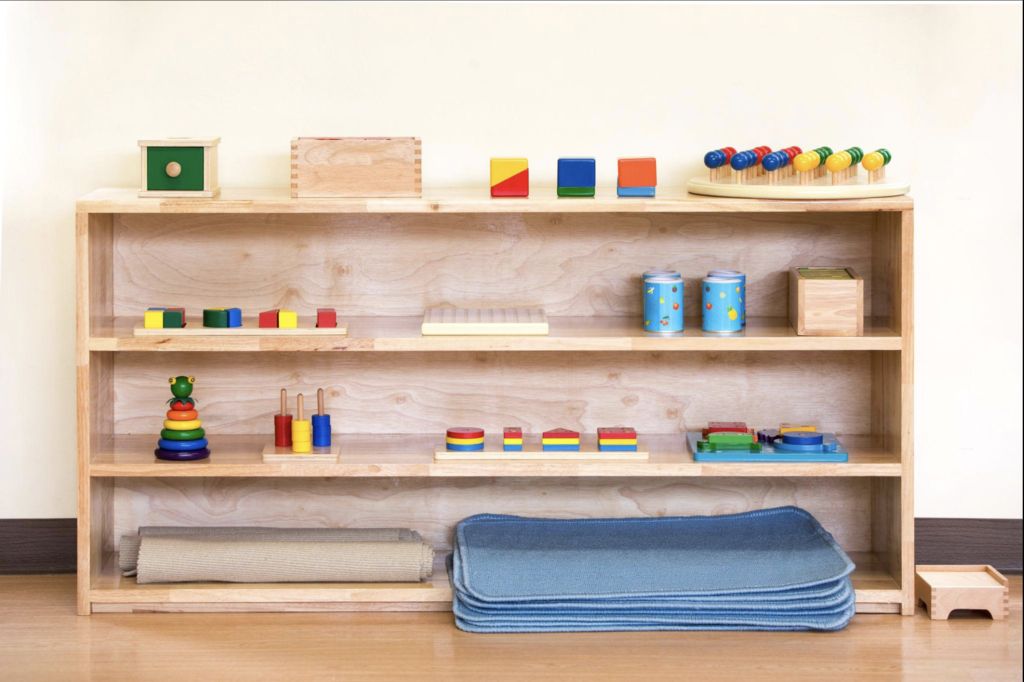
Setting Up a Montessori Space at Home (Without Spending Money)
You don’t need a Pinterest-perfect room.
Start simple.
✅ What You Need:
- A low shelf (or even a small table)
- 5–8 activities only (not more)
- Baskets or trays
- A quiet, clutter-free corner
Why This Matters for ADHD
Too many toys = too many distractions.
Less = focus
How to Teach an ADHD Child Montessori at Home (Step-by-Step)
Let’s break this into simple, doable steps.
1. Follow the Child (Not a Strict Plan)
Instead of forcing lessons:
👉 Observe what your child is naturally interested in.
Then build activities around that.
Example:
- Loves cars? → Count cars, sort by color
- Loves water? → Pouring and measuring
2. Keep Activities SHORT (Very Important)
ADHD children don’t do well with long sessions.
👉 Aim for:
- 5–15 minutes per activity
Then take a break.
Short wins build confidence.
3. Use Hands-On Learning (Not Worksheets)
Worksheets = frustration
Hands-on = engagement
Try These Activities:
- Pouring water or rice
- Sorting objects by color/size
- Counting with beads
- Matching cards
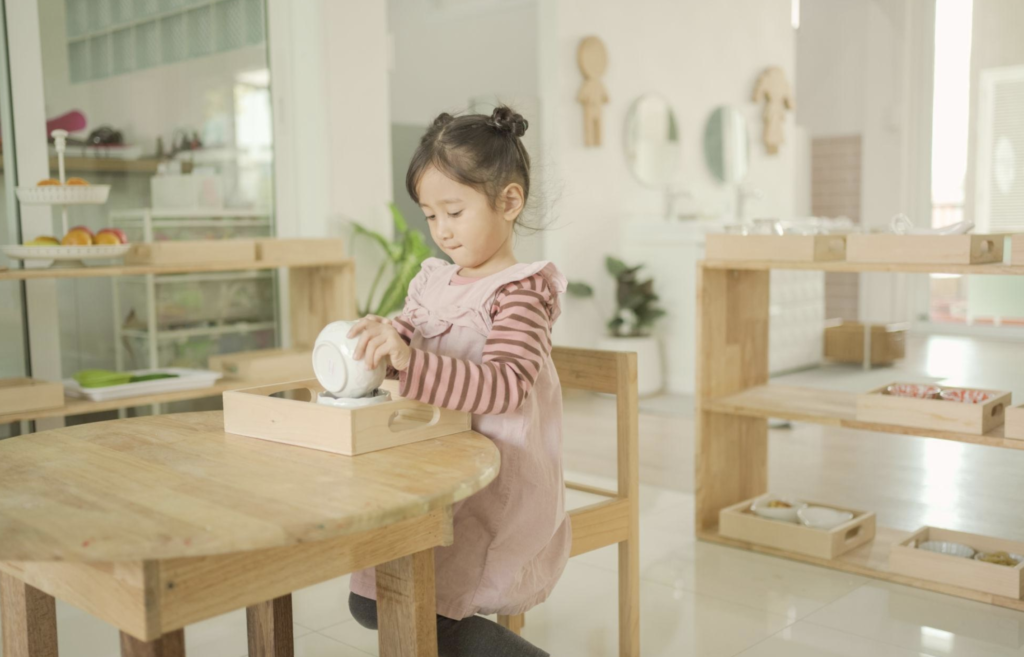
4. Build a Predictable Routine
ADHD kids thrive on structure—but it must be flexible.
👉 Simple routine example:
- Morning: Practical life (pouring, cleaning)
- Midday: Learning activity (math, letters)
- Afternoon: Free play
Keep it consistent, not strict.
5. Let Them Move (Yes, Movement Helps Learning)
Trying to make an ADHD child sit still?
That’s the fastest way to lose focus.
Instead:
- Let them stand
- Let them walk
- Add movement to learning
Example:
- Jump while counting
- Walk and match cards
DOs and DON’Ts for Parents (Very Important)

✅ DOs
- Do keep instructions simple
→ One step at a time - Do create a calm environment
→ Less noise, fewer distractions - Do allow choices
→ “Do you want this activity or that one?” - Do praise effort, not perfection
→ “You tried really well!” - Do stay consistent
→ Same routine daily helps focus
❌ DON’Ts
- Don’t force sitting still
→ Movement is part of learning - Don’t overload activities
→ Too many options = overwhelm - Don’t expect long attention spans
→ Keep expectations realistic - Don’t compare your child
→ Every ADHD child learns differently - Don’t turn learning into pressure
→ Montessori should feel calm, not stressful
Practical Montessori Strategies for ADHD Kids
Let’s make this even more actionable.
🧩 Strategy 1: Use “Work Trays”
Put each activity in a tray.
👉 Why it works:
- Clear beginning and end
- Reduces overwhelm
🧩 Strategy 2: One Activity at a Time
Don’t present everything at once.
👉 Instead:
- Show one activity
- Let them finish
- Then introduce another
🧩 Strategy 3: Use Timers (Gently)
- Not strict timers—but visual ones help.
- 👉 Example:
“Let’s try this for 5 minutes.”
🧩 Strategy 4: Rotate Activities Weekly
Keep things fresh.
👉 Every week:
- Remove 2–3 activities
- Add new ones
Real-Life Example (What This Looks Like)
Let’s say your child struggles with focus.
Here’s a simple day:
- Morning: Pouring water (10 min)
- Break
- Sorting colors (8 min)
- Lunch
- Counting beads (5 min)
- Free play
👉 Notice:
- Short sessions
- Breaks included
- No pressure
🎁 Free Printable: ADHD Montessori Routine Chart
Make your days easier (and calmer).
Create a simple printable chart with:
- Morning routine
- Activity time
- Break time
- Free play
What to Include:
- Pictures (for visual learners)
- Simple words
- Checkboxes
💬 Gentle Reflection (For You)
Take a moment.
- Are you expecting too much focus at once?
- Is your setup too busy or overwhelming?
Small changes can make a big difference.
🔗 You Might Also Like
- Montessori Worksheets for ADHD Preschoolers
- Simple Daily Routine for 3–5 Year Olds
- How to Improve Focus in Kids Naturally
Final Thoughts
Teaching an ADHD child at home doesn’t have to feel overwhelming.
You don’t need perfection.
You don’t need expensive materials.
You just need simple systems that work with your child—not against them.
Start small.
Stay consistent.
Keep it calm.
And most importantly—trust your child’s pace.